The events of October 30th and 31st 1956. The revenge killing of AVH secret policeman carries on in Hungary. The Soviet leadership at first agree to withdraw their troops and tanks from Budapest but the next day after pressure from the lower ranks of the Communist leadership, the decision is reversed. The Soviet Army is ordered to crush the Hungary Revolution. A biography of Soviet leader Khrushchev.
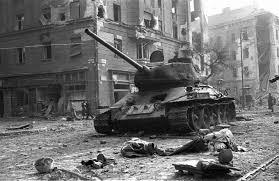
Bitter street fighting in Budapest. Events elsewhere in Hungary, a biography of Attila Szigeithy, leader of the revolution in Western Hungary. Hungarian Prime Minister announced dramatic democratic reforms in Hungary, he reaches a cease fire deal with the Soviets. Soviet troops and tanks begin to pull out of Budapest, it seems as if the Hungarians had seemed to have won their battle for independence and freedom or had they.
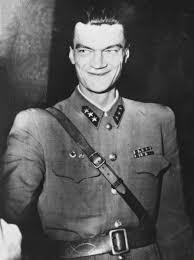
The events of Wednesday 24th October and Thursday 25th 1956. Soviet troops and tanks are sent into Budapest to crush the uprising against the Communist regime however young armed Hungarians fight back in bitter street battles. The Soviet Army quickly becomes bogged down in urban fighting, unable to defeat the Hungarian revolutionary fighters. A biography of Hungarian Colonel Pal Maleter who joins the Hungarian revolutionary movement and takes command around the Corvin Cinema in Budapest.
The events of Tuesday 23rd October 1956. A demonstration march by Budapest students swells to two hundred thousand strong as citizens of Budapest join in to protest against the Hungarian Communist regime. An attempt to take over the Hungarian state radio station turns into a armed battle as the secret police fire on the protesters. Rebels seize weapons from factories and armouries, the Hungarian Revolution has began. The Soviet leadership decide to sent Soviet troops and tanks to crush the revolt. A biography of the Hungarian Communist leader Erno Gero, who makes a ill judged radio address which inflames the protesters.
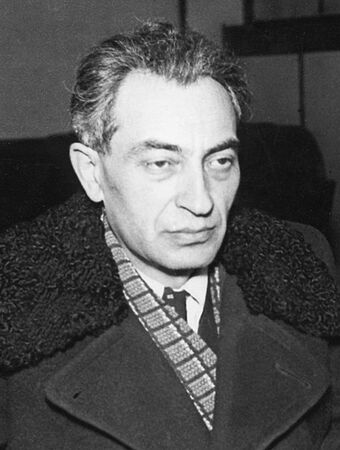
Hungarian Prime Minister Imre Nagy tries to introduce more liberal reforms but his political reforms are largely blocked by Communist leader Rakosi, the Soviets demand the removal of both men from power. A biography of Imre Nagy who would become one of the key figures of the Hungarian Revolution. Public discontent with Communist rule in Hungary grows, on Monday October 22nd students in Budapest meet and plan a protest march for the next day. That march would begin the Hungarian Revolution of 1956.
The story of Hungary from the Soviet occupation in 1944 through the Communist take over of the country, until 1953. Rakois is chosen by Stalin to become the Communist dictator of Hungary, he creates a highly repressive Stalinist regime in Hungary with a secret police, the AVH, opposition parties are banned and opposition political leaders are either imprisoned or killed, in Hungary hundreds of thousands are imprisoned, thousands are murdered. In 1950 Rakois began a purge of fellow Communists, they are tortured into making false confession as to being western spies then hanged. The economy of Hungary is sent into a downward spiral by the policies of Rakosi and massive payments having to be made to the Soviet Union. In 1953 after the death of Stalin, the new soviet leadership force Rakosi into toning down the scale of his terror and forced to accept Imre Nodge as the prime minister of Hungary.
In the new year a ten part series on the Hungarian Revolution of 1956 will begin. The first two episodes will tell the story of Communist rule in Hungary from the Soviet occupation in 1944 to the eve of the Hungarian Revolution in October 1956. The following six episode will tell of the bloody struggle in Budapest between Hungarian freedom fighters and Soviet troops. The ninth episode will tell of the brutal revenge carried out by the Communists on those freedom fighters followed by a final episode which will tell of the rest of the Communist dictatorship of Hungary until the fall of Communist in Eastern Europe.
The first episode will be published on Saturday 4th January 2020
In 1953 a strike by building workers in East Berlin against higher production targets quickly grows into a mass demonstration against the East German Communist Government. Further strikes and demonstrations spread though out East Germany as East Germans protest against years of Communist rule. However the next day in East Berlin another demonstration by East Berliners is meet with gunfire from Soviet tanks, hundreds are killed, thousands are arrested, many are sentenced to long terms of imprisonment. A biography of Walter Ulbricht the Communist ruler of East Germany.
The Communists had gained control of Albania in 1944 but by 1949 the Communist regime had been weakened by internal purges and isolated by the spilt between Tito and Stalin. American and British intelligence agencies plotted to launch an attempt to overthrow the Communist Government in Albania which might have succeed but for the fact a British Spy chief Kim Philby knew about it, his story and that of the Cambridge Spy Ring.
In the summer of 1948 Stalin decides to cut road, rail and river transport from West Germany to West Berlin, he hopes to force the Americans, British and French troops out of the City. However the Western power response by trying to supply West Berlin by air with the food and fuel needs the people of the City require. The airlift is a great success for the Western powers and in 1949, Stalin ends the blockade. The story and biography of the so called Candy Bomber.



 koreanwarpodcast
Recent Comments